Dream Weaver
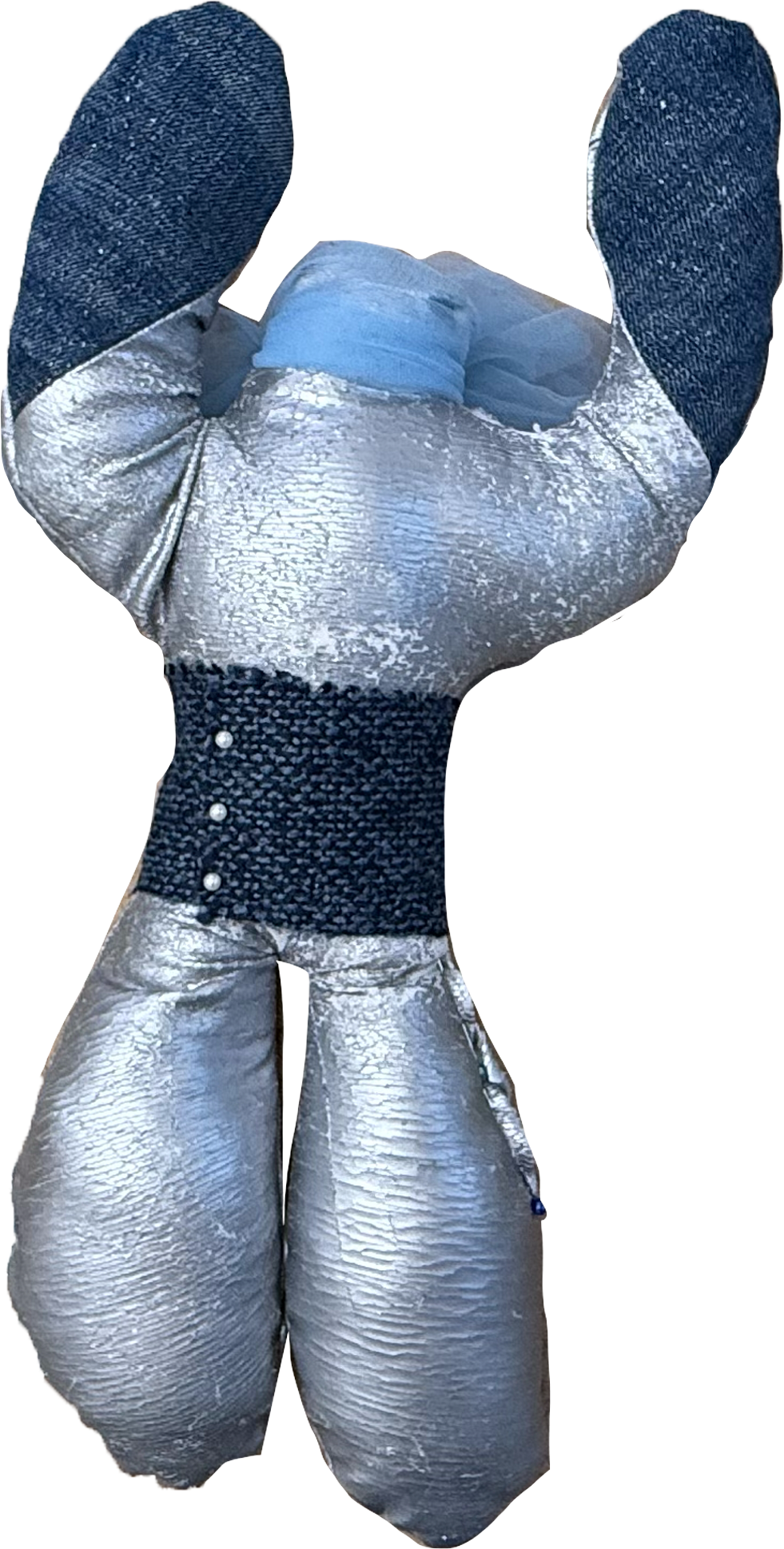
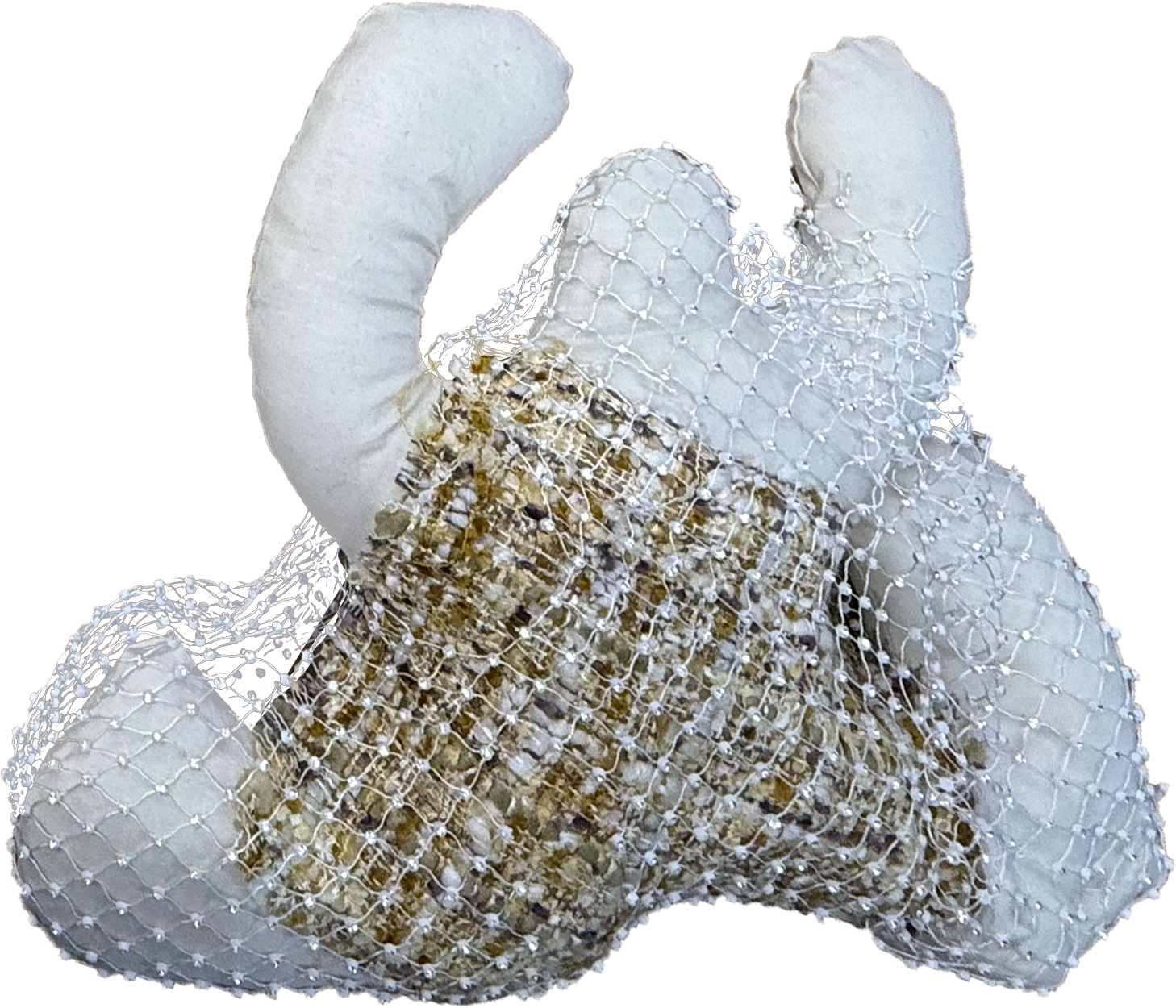
An interactive audiovisual installation inspired by dreams. These three plushies are made from found textiles and embedded with sensors. Audiences are invited to pull, stretch, and play with them. Their touch is transformed into sound and visuals in real-time with a p5.js sketch, creating a collaborative symphony with fellow audience members.
Medium
Reclaimed textiles, force sensors, stretch sensors, arduino micro controller, p5.js, sound, projection.
Exhibited
Brooklyn, NY. NYU IMA Summer Show, August 13, 2025.
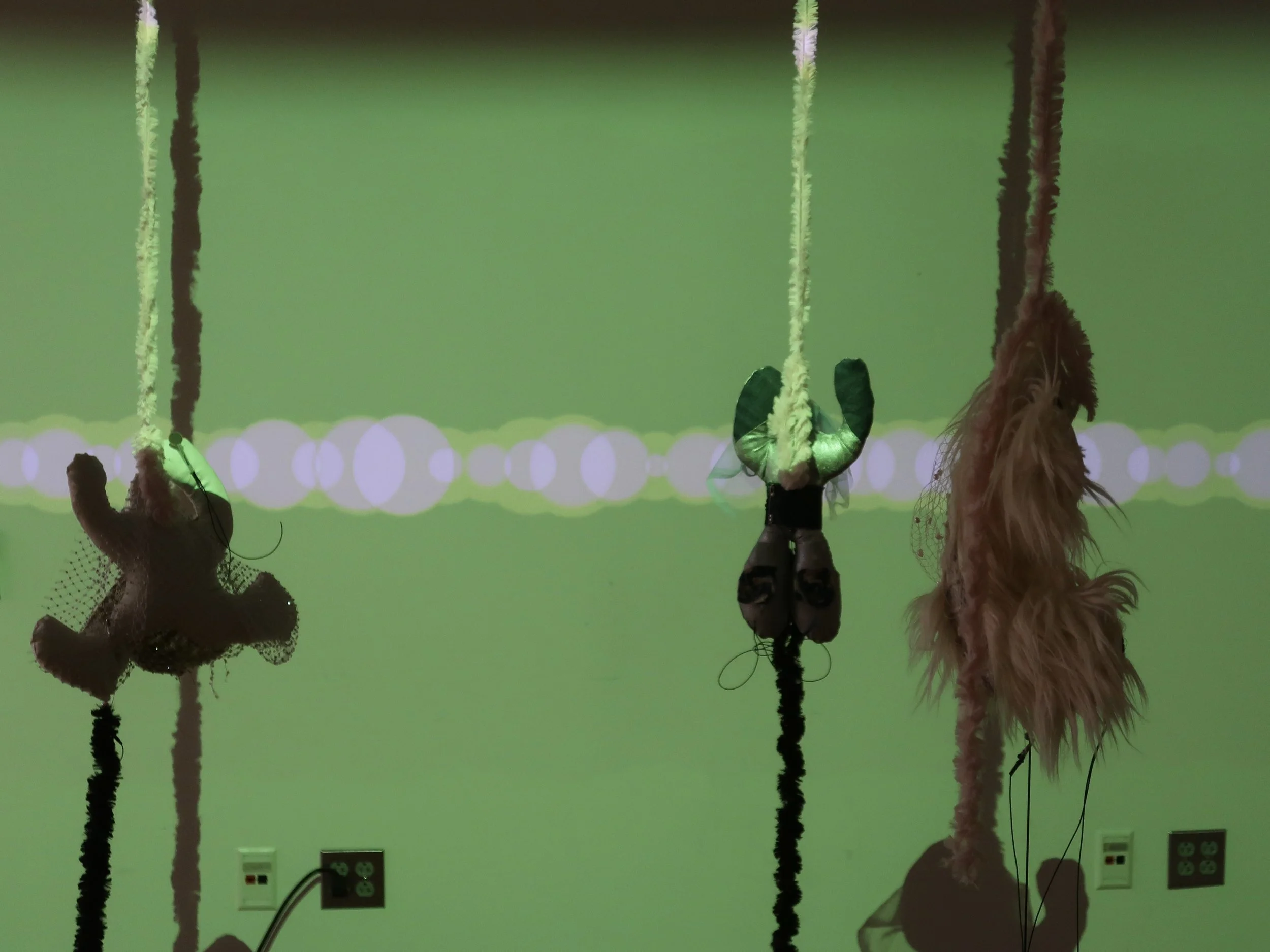
Photo by Daphne Chang

Photo by Brian Ho
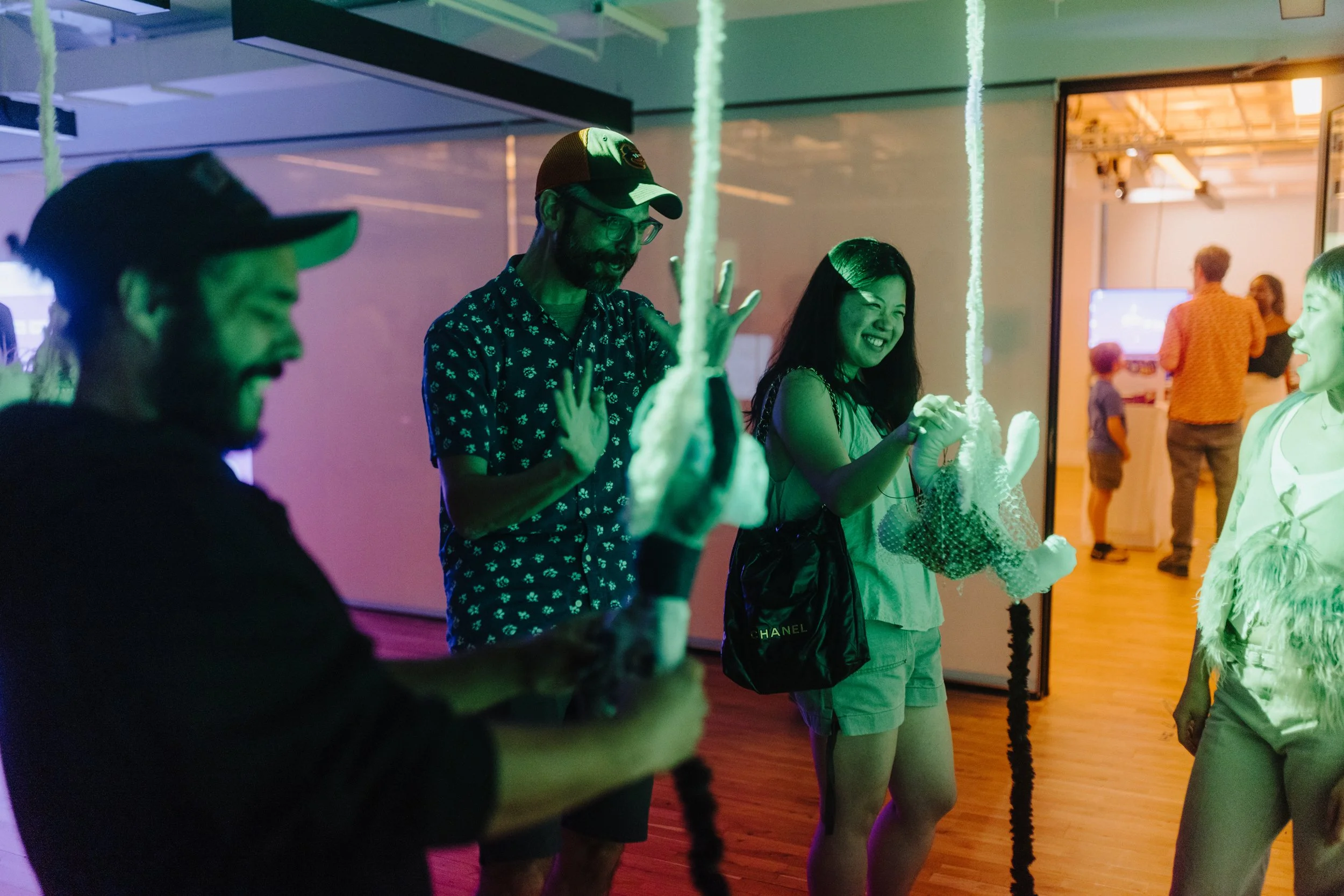
Photo by Brian Ho
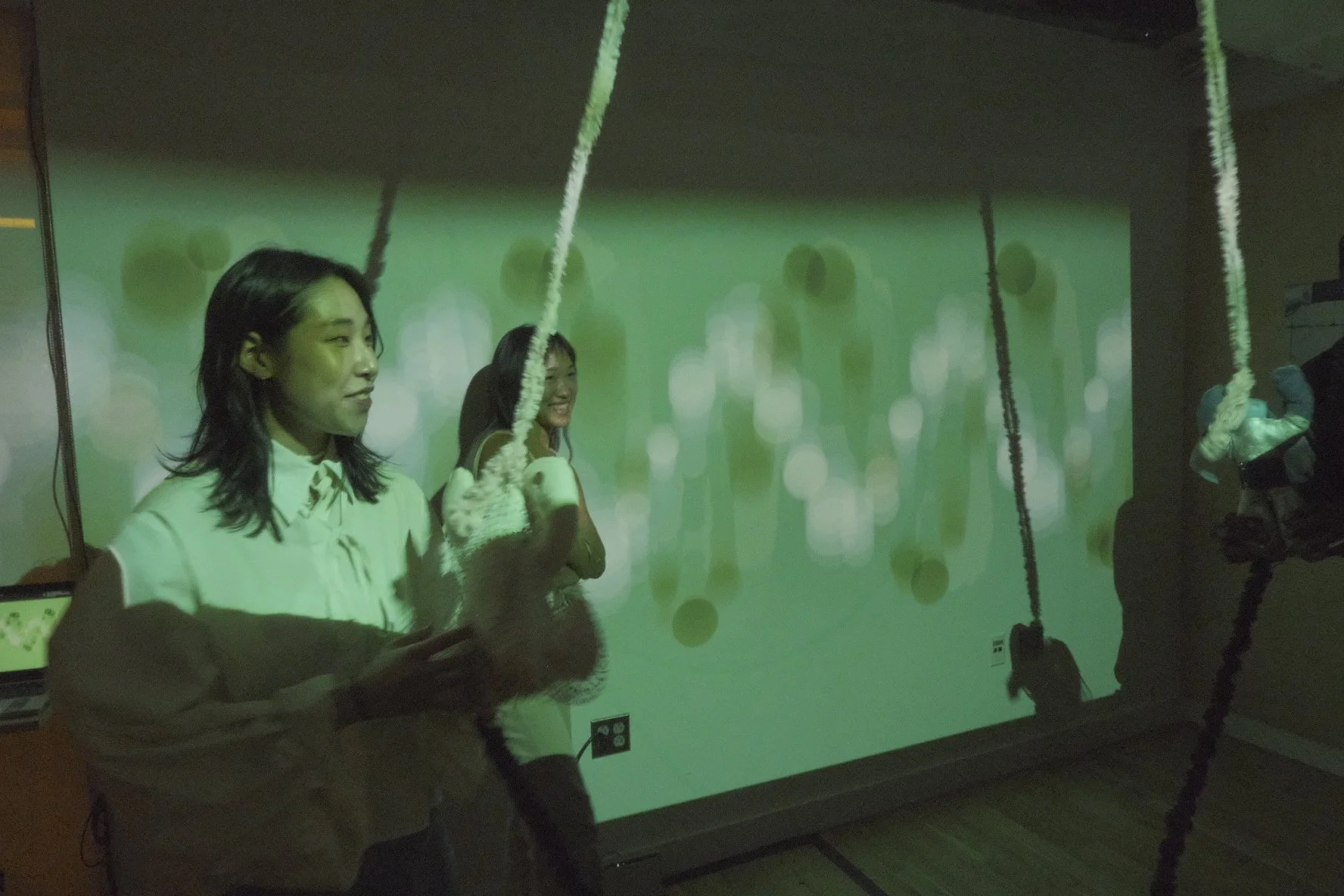
Photo by Daphne Chang
case study
Concept
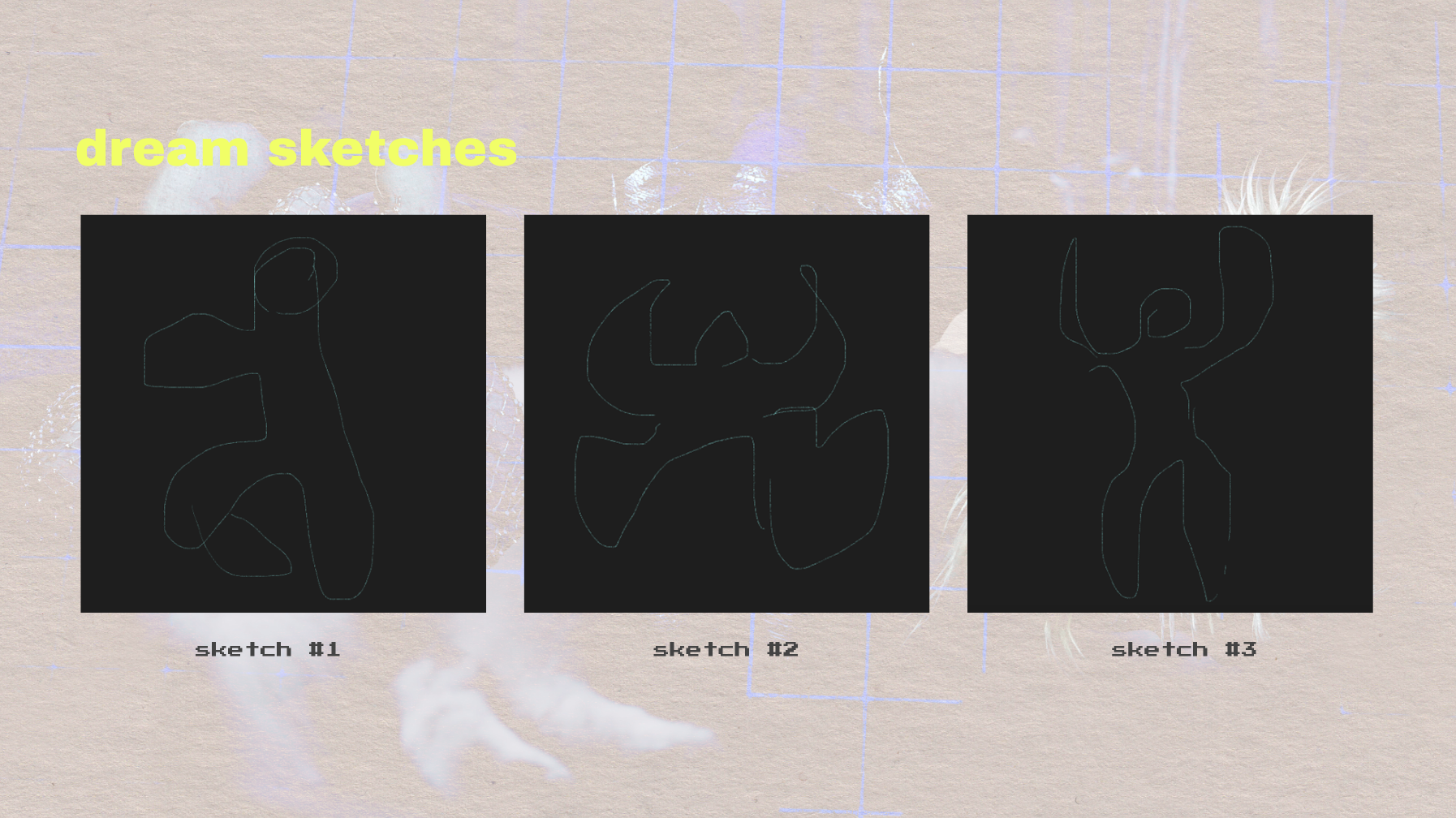
This interactive installation translates the ephemeral world of dreams into a tangible, collaborative experience. The work features three plush sculptures suspended from the ceiling, each born from sketches of dream imagery and crafted from an eclectic mix of reclaimed textiles.
Embedded within these soft forms are force and stretch sensors that measure the audience's interaction—every pull, squeeze, and touch.
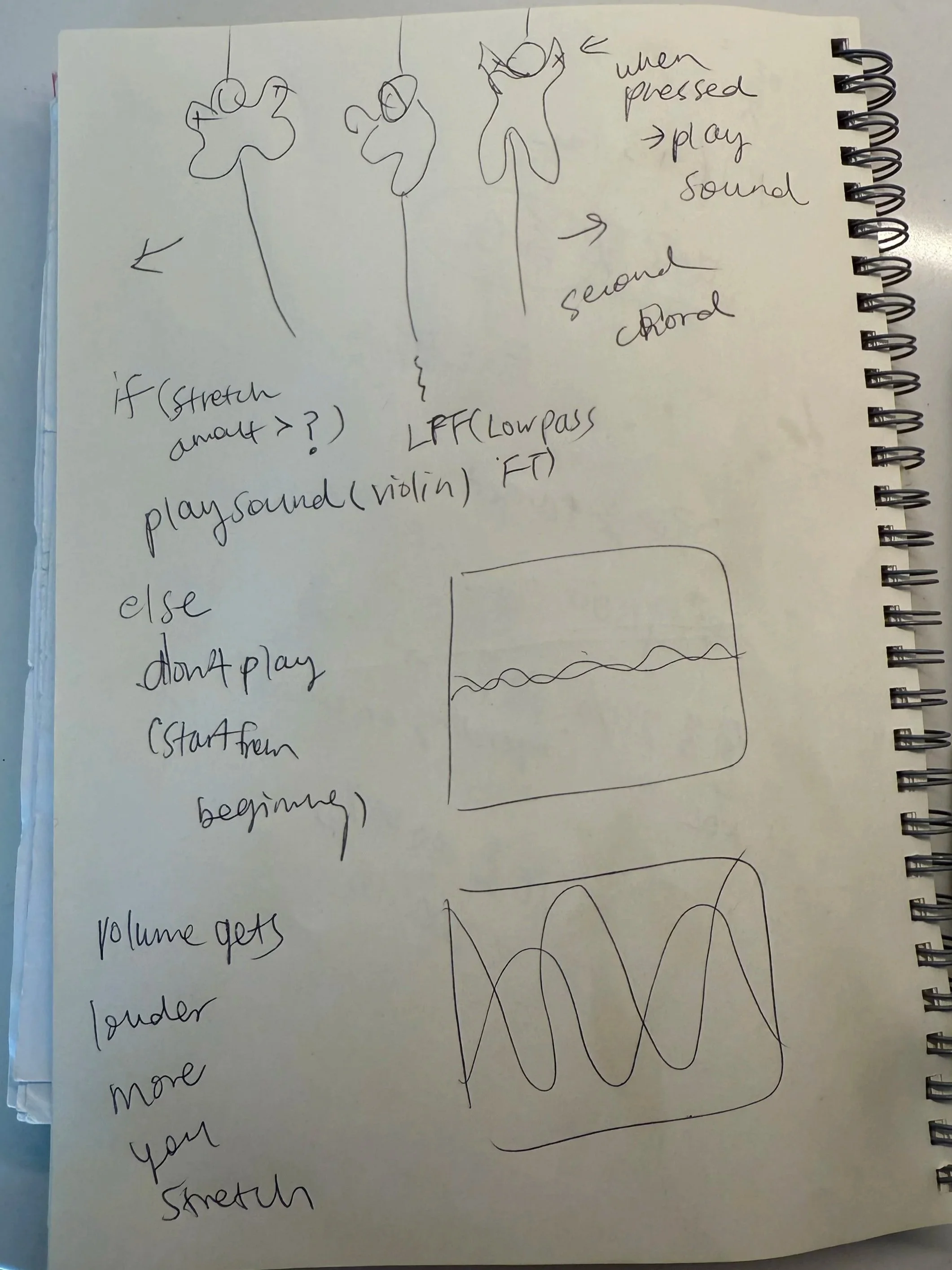
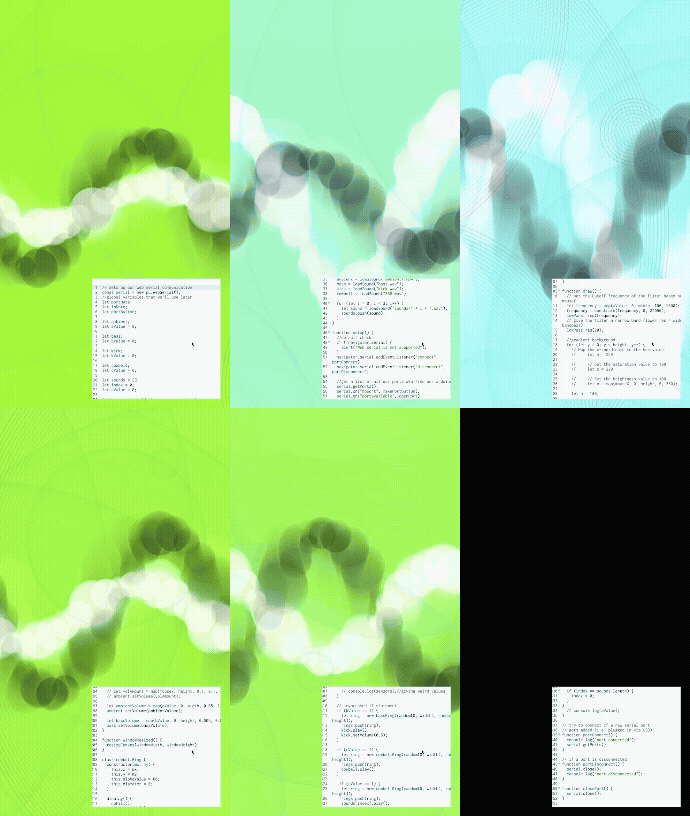
These physical gestures are then fed into a p5.js sketch, which generates a live, evolving audiovisual scape. The pressure exerted on a plushie might create a beat, while stretching it could warp the corresponding visual projection or alter the pitch of a sound.
The piece invites intuitive play, encouraging participants to explore the connection between their actions and the resulting sensory output. As multiple people interact simultaneously, they become unwitting collaborators in a collective symphony of sight and sound.
Role
I was involved in the ideation and designed everything from scratch, using recycled materials found on the floor to make the plushies, coded with a bit of a help from Google Gemini, and connect and wire the plushies and the p5 sketch using arduino micro controller.
Summary
Skills used
Prototyping, graphic design, pattern making, sewing, coding (p5.js), physical computing (arduino), wiring, soldering, installing.
Challenges
When I first tested it out hanging the plushies on a jute rope, it did not look good (in a horrifying deadly way). That almost got me thinking maybe this hanging idea won’t work, but then I was reminded to just keep trying, which I did and gladly found out that it’s just the matter of materials.
Lessons learned
Being resourceful, project management, experimenting, fabrication, play testing & incorporating feedback.
Inspiration
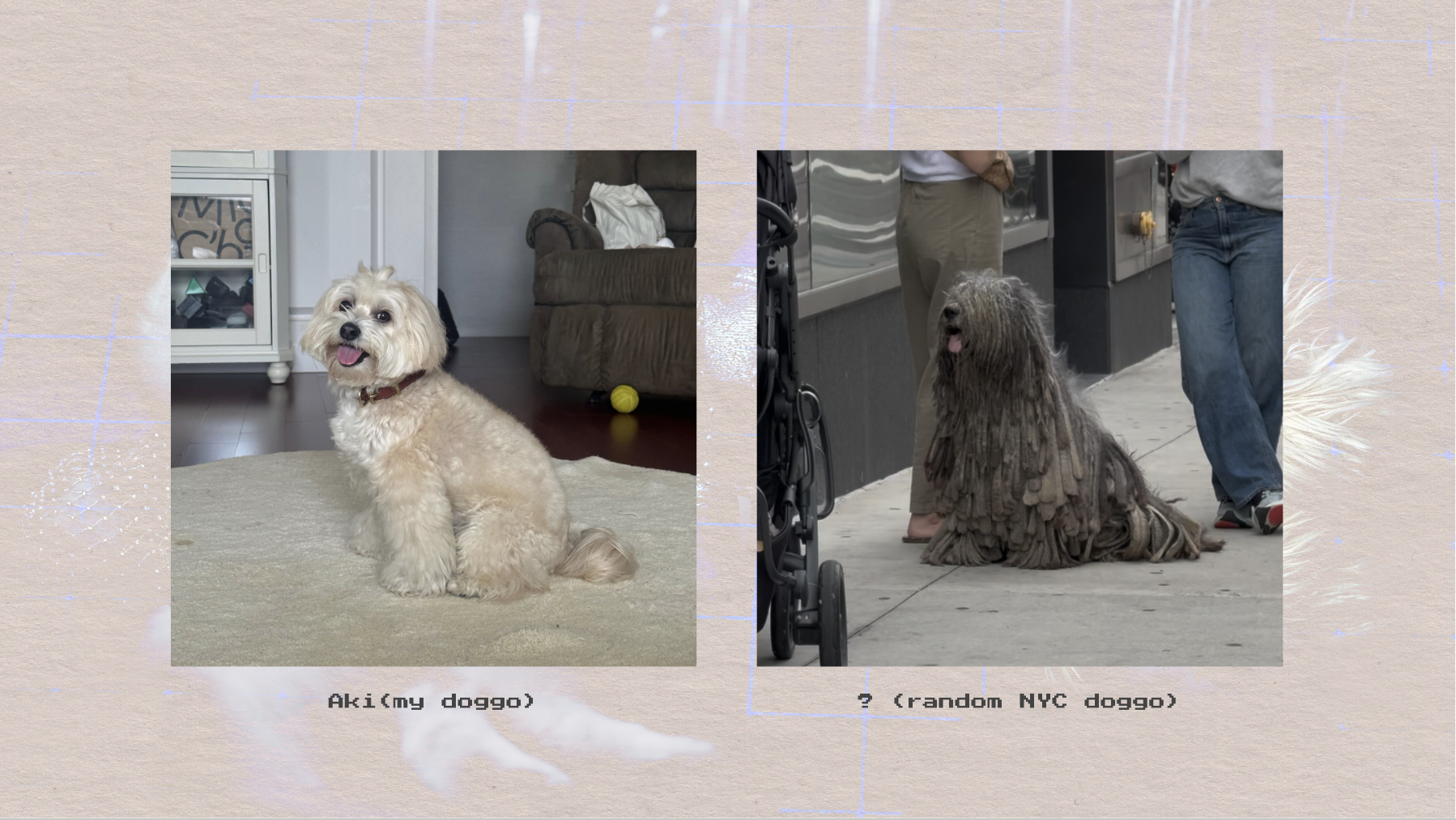
Inspired by a dream I had, where I was bitten by a very cute furry rabbit, it led me down the quest of finding out what people find comforting. Why certain form/material seems to make people feel calm vs stressed, or if there’s an universal experience on these feelings.
For me personally, I find fluffy and soft furry things therapeutic, and I followed that intuition and decided to make some soft sculptures based on the sketches I drew after my dream. They are rough figures in sleep positions that I find soothing. That became the center shape of this project.
I set out to make some interactive experience, as I want the experience to be somewhat fun and playful. I researched into sensors that I could incorporate into the plushies to encourage movement and play (pulling & squeezing).
Process
Step 1|Making of plushies
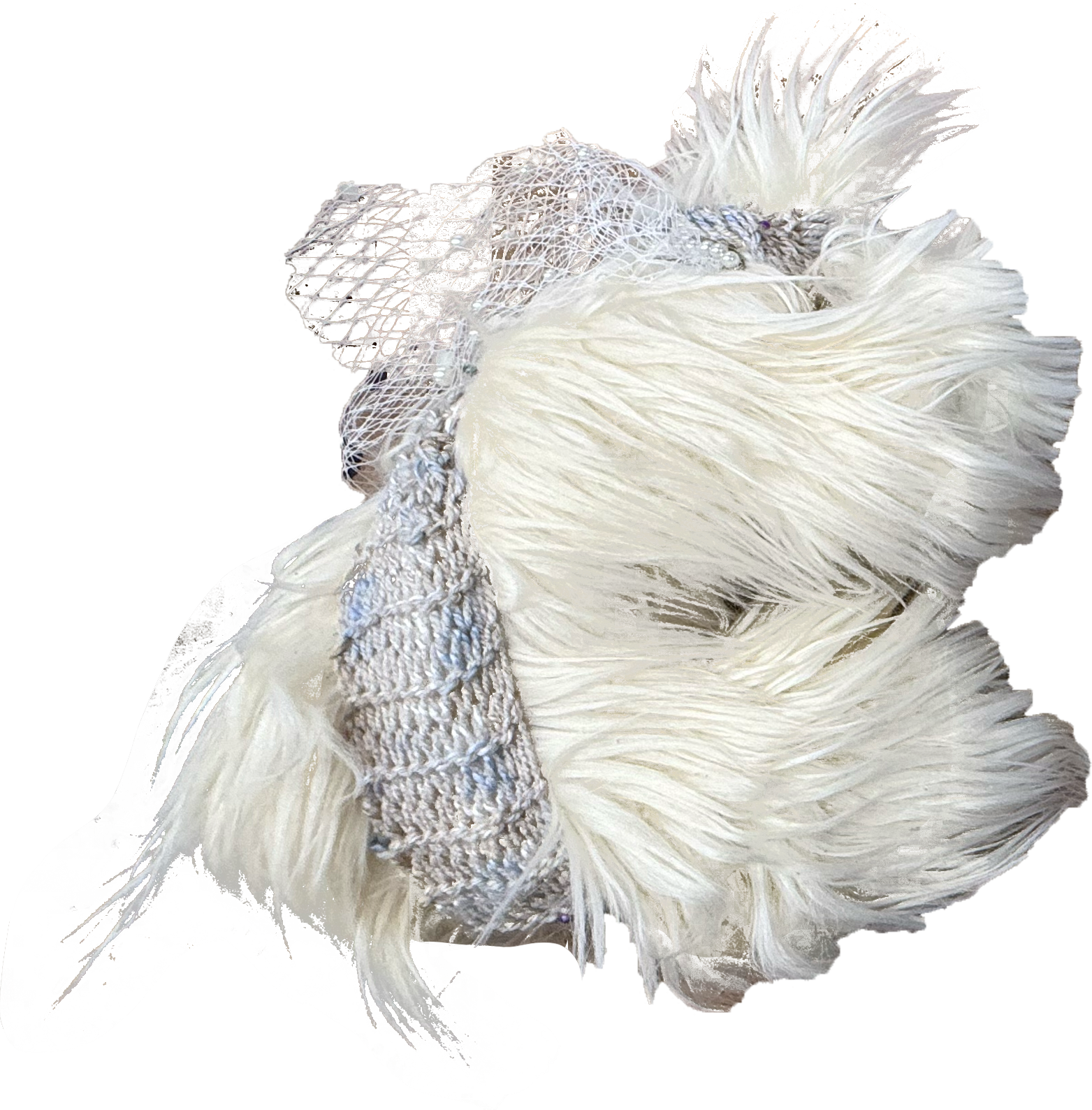
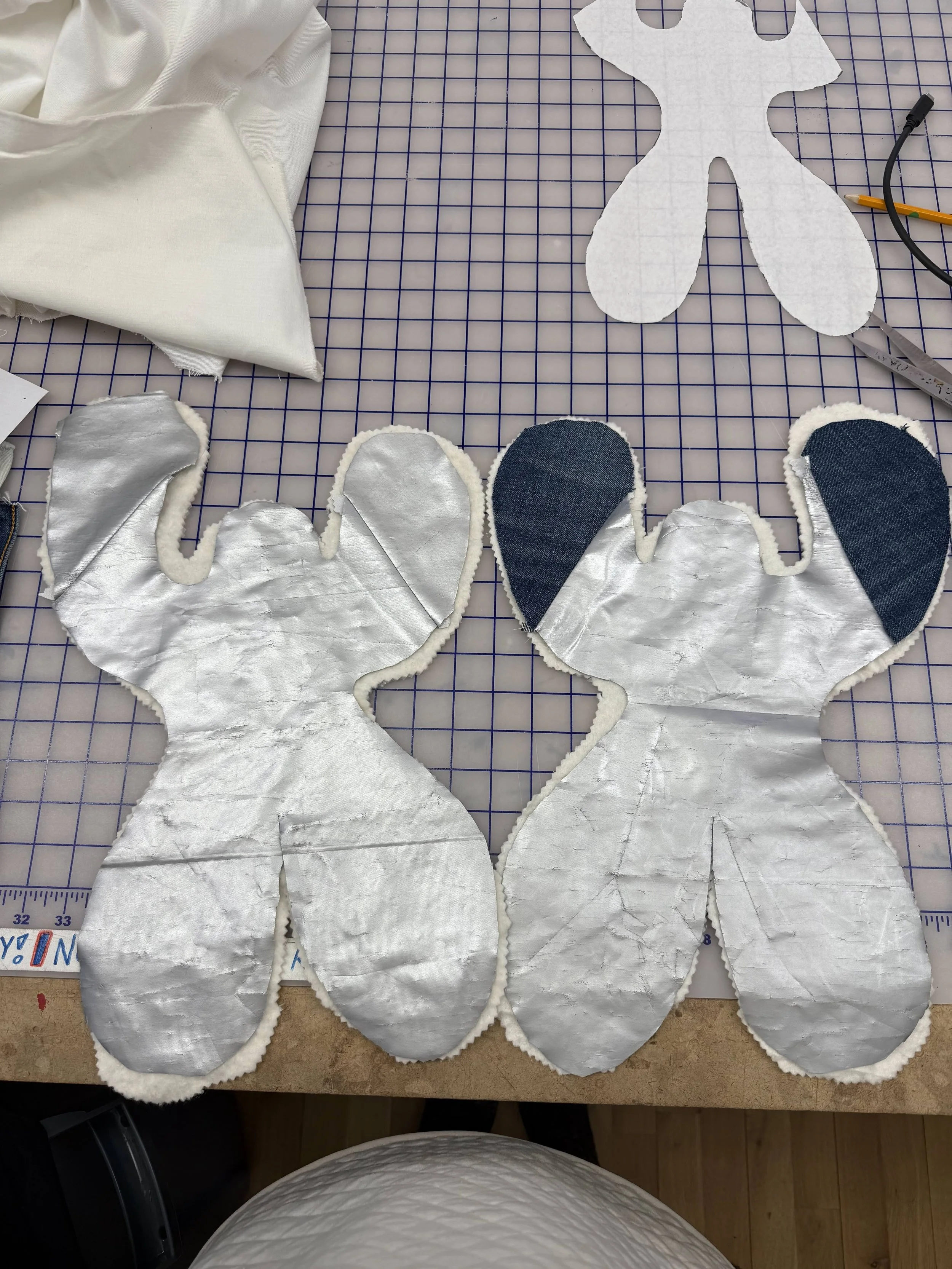
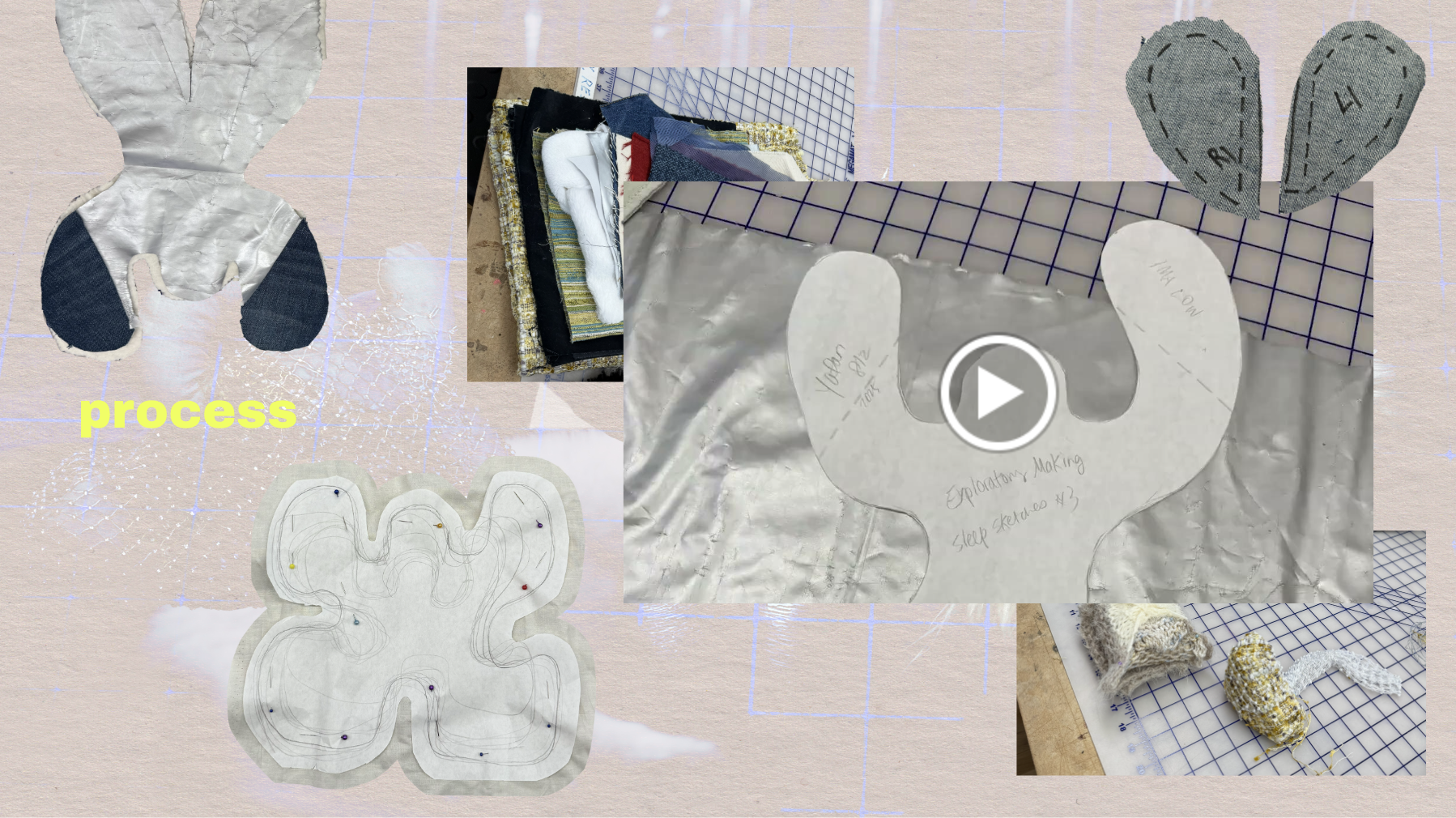
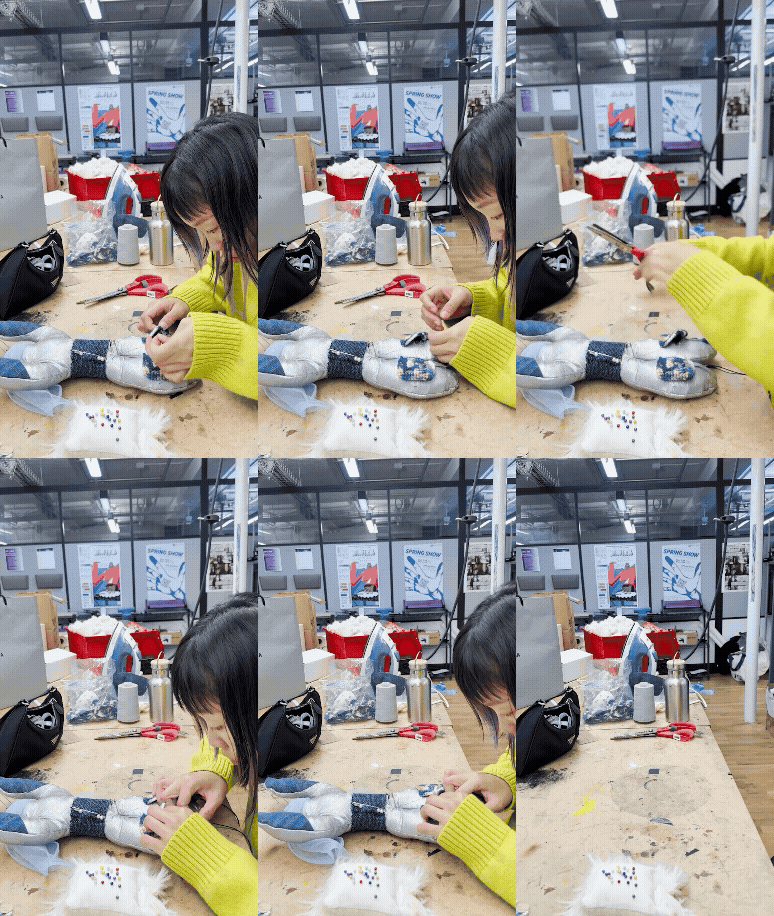
I drew the patterns based on the dream sketches I had, used the scrape fabrics I found on the junk shelf at school, and sewed the plushies.
Step 2|Coding the sound visualizer
I coded the sound visualizer in p5.js based on a sketch I had, and connected them to some sound samples I downloaded.
Step 3|Connecting!
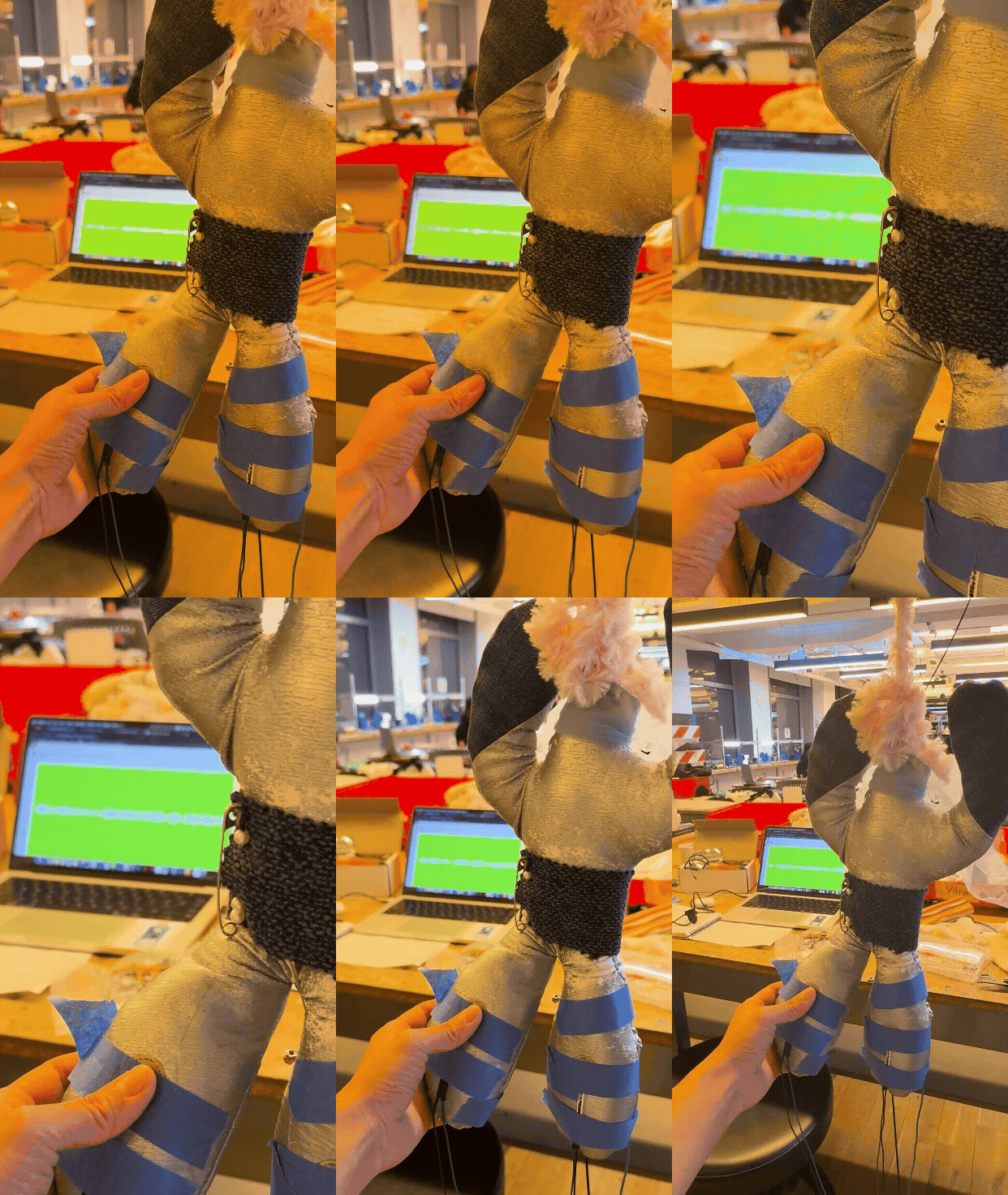
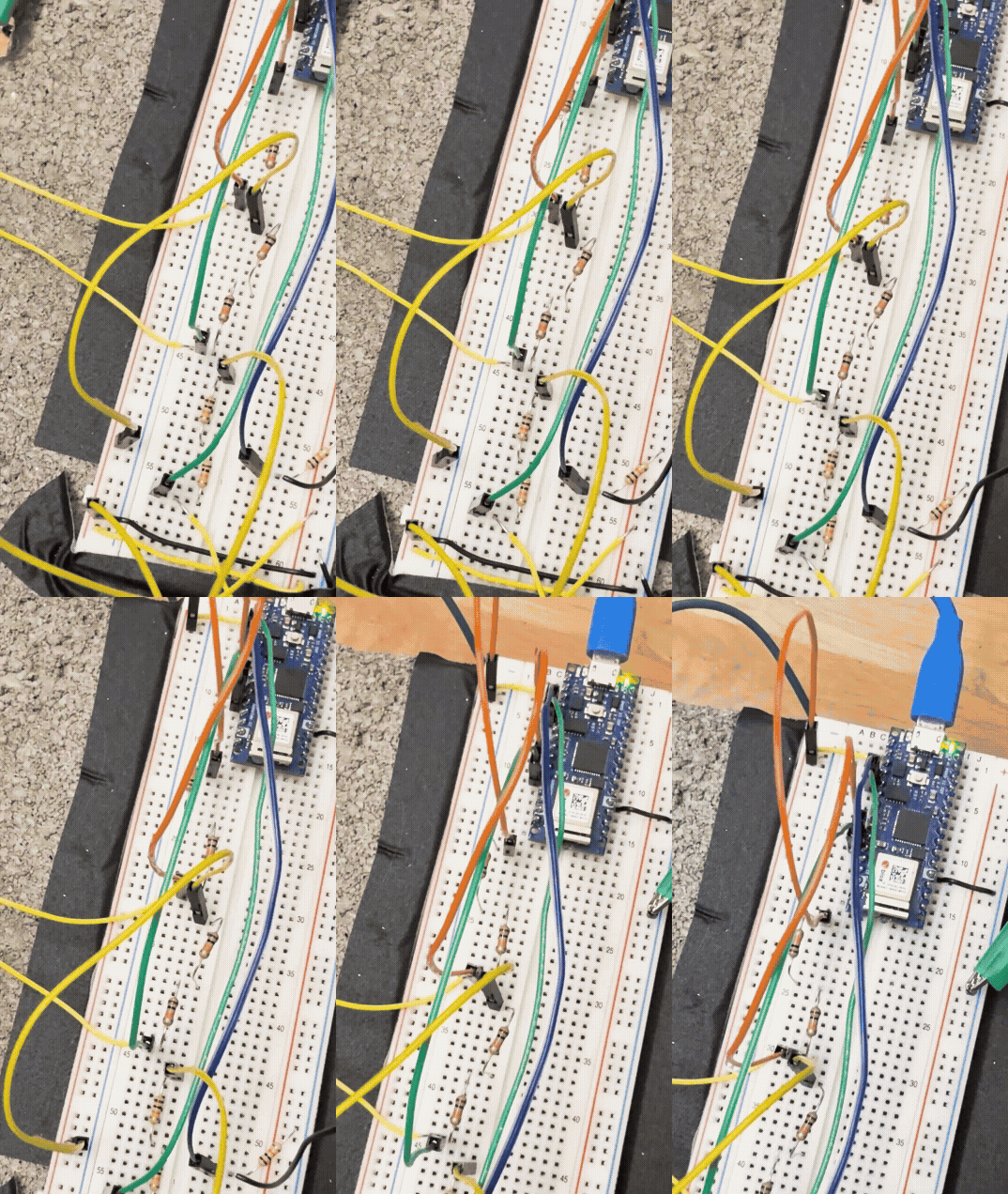
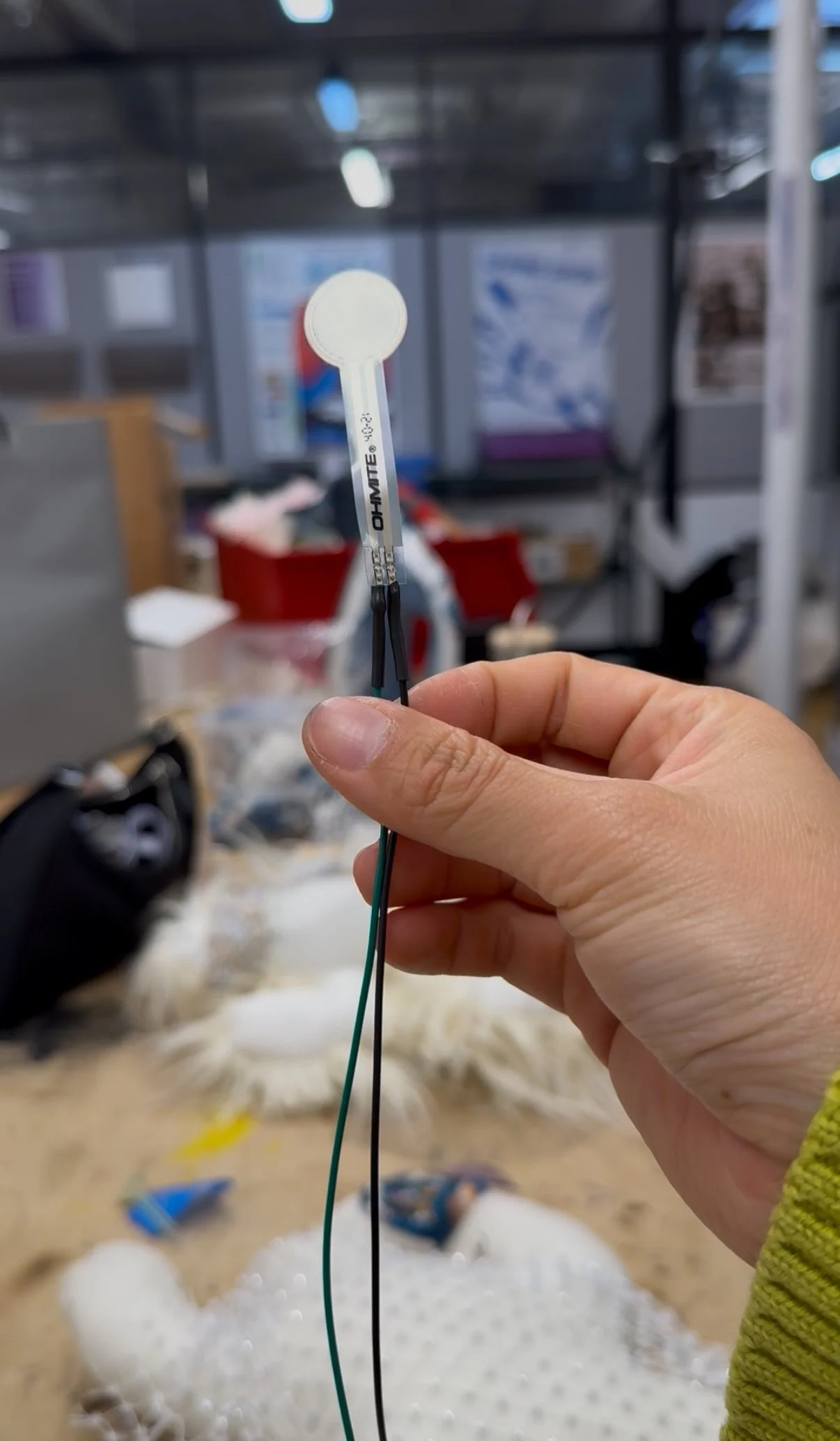
This was the most challenging part of the project, to figure out which sensors to use and trying to connect the plushies to the sound visualizer. I researched and found out these stretch sensors from adafruit is perfect for the effect I want, and adding some force sensors so that when the plushies are hanged and attached to the sensors, the movement will trigger the sound visualizer to make some sound and animation.
Step 4|Play testing
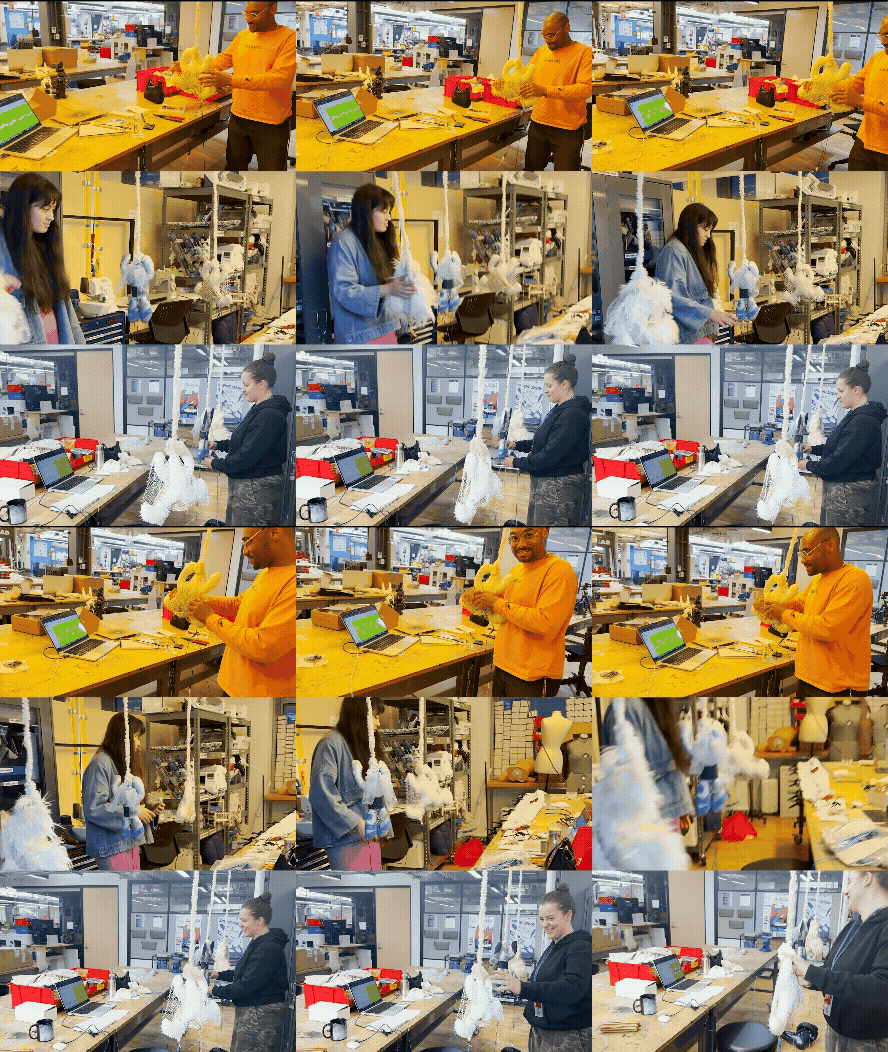
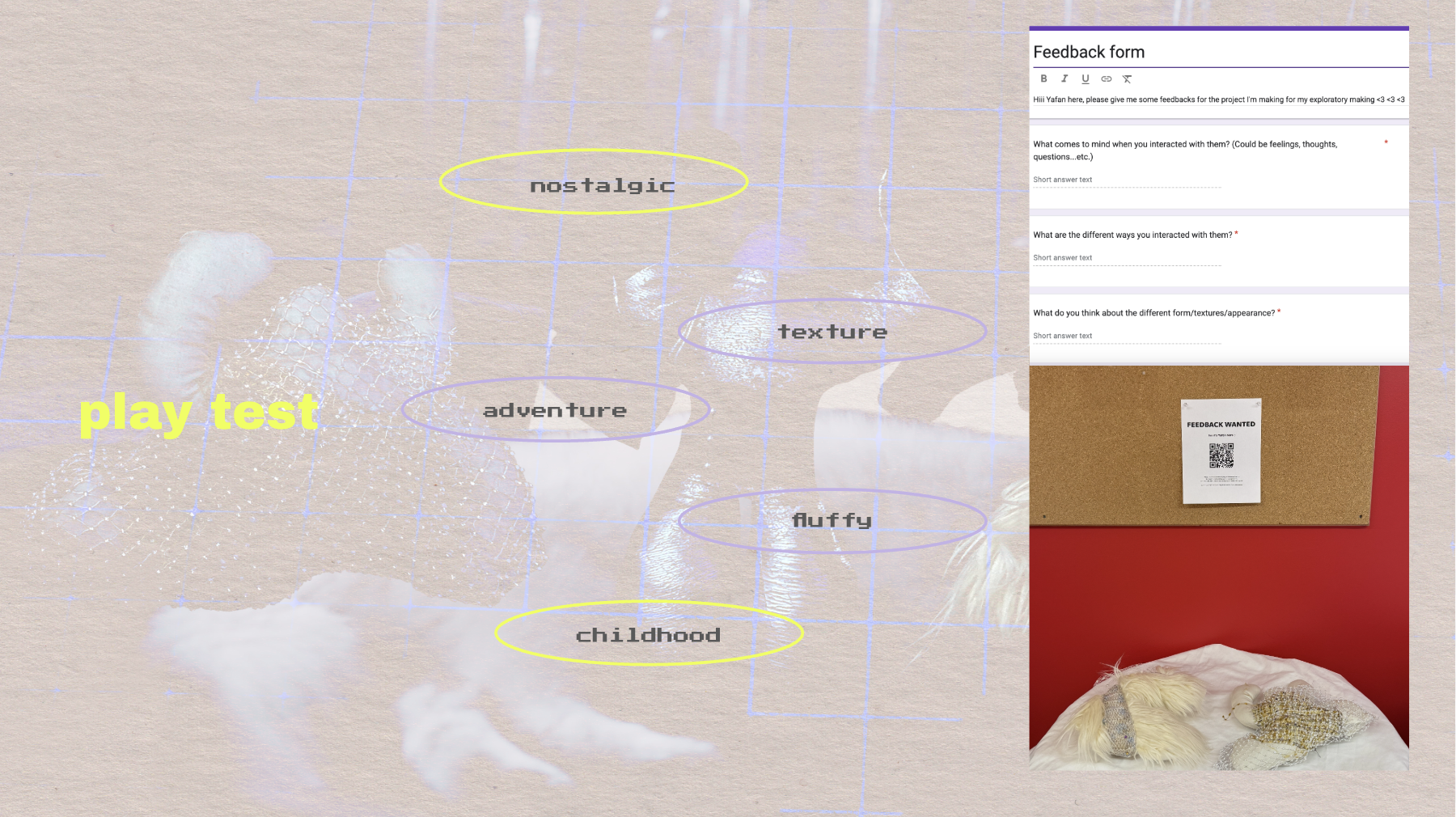
I have gathered two stages of play testing, one was when I first made the plushies to get feedback on how people feel about the textures, and one after I have connected the sensors and invited people to come play.
Step 5|Installing
I had a vision of how it would be displayed when designing this project, so I asked for a space that would allow audience to walk around and play with the plushies. I installed the projector and had to adjust the placement of the plushies to accommodate the space, and soldered all the wires to make them more secure.
Prototyping
Fabrication
Play test
Final
Acknowledgement
Thank you Jess, Ang, Brian, Sarah, Mengna, Robi, Rev, Sehmon, and all my fungi cohort for being the best support!
